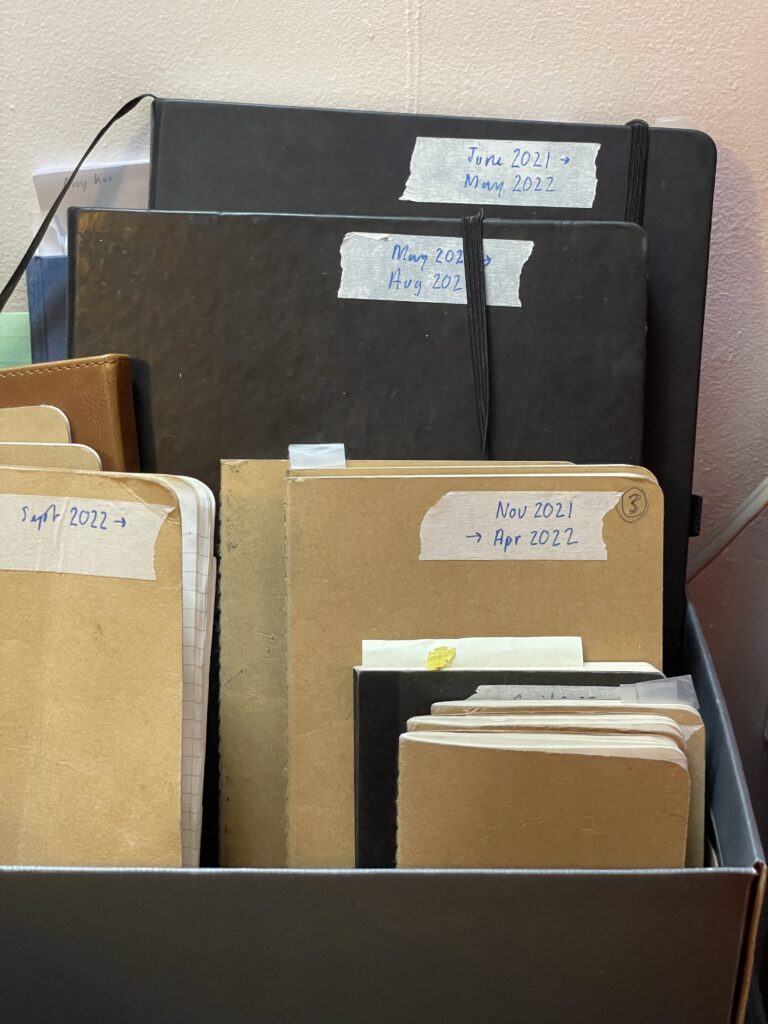
DYCP: A Personal Journey (1)

Back in May 2022, I was fortunate to receive a Developing Your Creative Potential (DYCP) grant from the Arts Council. Essentially, the grant was to help me complete my novel and get it ready to be put in front of agents or publishers. I’d already completed a draft of 55,000 words and I figured I’d need, say, six months at most to finish the novel and then another five or so months to get it out there.

The application was particularly hard for me to write, even as someone who was very used to writing grant applications, and this was due to one very simple terrifying fact: this time it was personal. The grant was amazing in the sense that it was all about me and my creative practice. 

I found it incredibly hard to spell out exactly what I wanted from the ‘step-change’ in my creative practise even though I knew, in my heart, exactly what I wanted: to complete a long-form work of fiction, was high-quality, contained concrete poetry, mashed up different genres, and which was, at it’s heart, a soulful song about love and grief. 

Writing the application, I found I was having to dig very deep. It made me think about my roots in East London, growing up in Essex, my itinerant years travelling (street drawing, mountain walking and agricultural working) followed by the enjoyable grind of bringing up children and running Catcher Media in Hereford with my wife (and best friend), Julia.


My writing had been with me since I wrote comic books and wrote short stories as a teenager, and I’m used to flexing my writing muscles on scripts, poetry and grant applications but with DYCP I was making a commitment to finish my novel. It felt like a massive thing to contemplate. Jonathan Davidson at Writing West Midlands was a fantastic support at this time, and I can’t thank him enough for his guidance and encouragement.


Toward the end of writing the novel, I would often describe the process to people: at the start I thought I was going to do a 5 or 10K run, for which I was fairly match-fit, but in the end it was more like running three marathons back-to-back. At times, writing the novel was exhilarating and often utterly exhausting.

The first stage of the DYCP entailed finishing a draft of the novel to send to writer C.D. Rose for a manuscript assessment. While waiting for his assessment, I attended a ‘Getting Your Novel Over The Finishing Line’ Arvon residential course in Shropshire. Both of these courtesy of the DYCP grant. Around this time, I also showed the manuscript to my wife, Julia, and two close friends Dean and Richard (both avid readers and cheesemakers) .
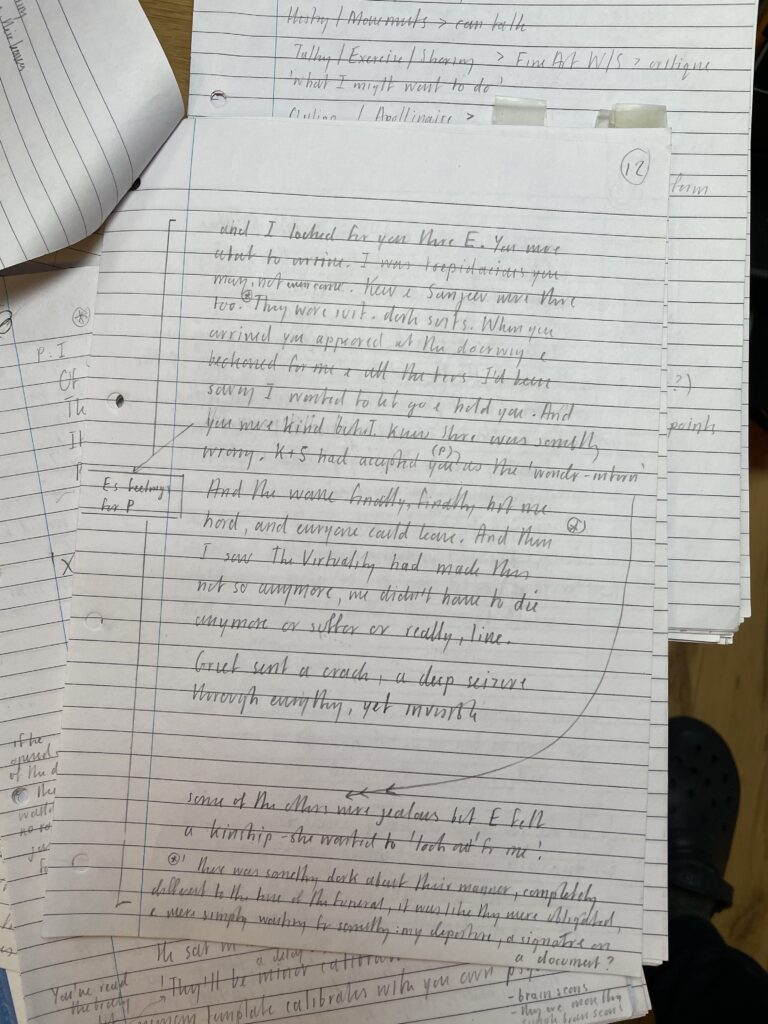
Up until this point I had only received comments on individual chapters from fellow writers but C.D. Rose’s assessment, coupled with the feedback from my wife and friends, left me feeling seriously shaken. This wasn’t to say the feedback was bad. Overall, they were pleasantly surprised that it was such a ‘page-turner’ and said it had a lot of heart. I was cheered too that no one asked really obvious questions about the plot. Now I look back at C.D. Rose’s report and see he presented me with straightforward and wise developmental edit suggestions, peppered with numerous tips about improving the novel and my writing generally. He discussed POV, describing locations, world building, style, the protagonist’s voice, sentences, over-writing, characterisation, structure and plot, themes, reading suggestions. At the time, as I’d thought my novel was almost finished, it was very difficult to process. His comments and some very clear-sighted suggestions from Julia, came just before I’d spent an intensive week at Arvon. The was packed with committed writers and some excellent feedback from tutors Claire Fuller and Jarred McGinnis. Taken as a whole, all of this left me I seriously wondering whether I was cut out for writing a novel. I thought I’d finished my ascent, but I was waking up to the fact that maybe I was still kicking around in the foothills.


After some gruelling months of self-doubt, I managed to start work once more on a new draft. In the months I was unable to work directly on the manuscript, I instead created in-depth back stories for the main characters in the book, a 6,000 word outline of what happened before the novel started and some short stories that tied in with the themes of memory and memory trading that is core to my novel. This process was completely intuitive and not only did it help rebuild my confidence but it also served the novel really well in subsequent drafts of the novel.

When I spoke to another friend, Lisa Williams (a long-time friend from my art student days at Brighton who is also embarking on her first novel) we both agreed that the whole enterprise was a lot like deciding to build a table when you love tables and have some cherished pieces of wood but have little direct experience of woodworking tools and carpentry techniques, or even table design! Suffice to say, it was a steep learning curve, with some harsh lessons. Importantly, I discovered so much about the craft of writing, and the novel was getting better.

I realised my initial DYCP deadline wasn’t feasible so I called the Arts Council and we agreed to extend it until October 2023.

My book was in the first person with the protagonist speaking to his lost love, Eva, as ’you’ throughout. That last sentence was so easy to type but getting to that point in the actual novel-writing took me months. While I tried to figure it out, chapters of the book shifted from past to present tense and then back again on numerous occasions. I went from third person to first person, then close third person – I hadn’t even known what close third person narration was until months before – but it was when I hit on the first person talking to ‘you’ that things really clicked. I had searched high and low for the right approach to take in the manuscript but when I re-read a beloved book ‘The Friend’ by Sigrid Nunez, there on page two, was my answer. Subsequently people queried it but after much deliberation (and a strong case of following your heart) I knew it had to stay this way. My other major obstacle was, in a book about memory, that I needed to find a satisfactory and fluent way of dealing with flashbacks and memories. With the help of my writing mentors, I clawed my way slowly to something in which I felt completely satisfied. CONTINUED ON NEXT PAGE (1 of 2)